
A Weekend on Etna: A Wine, Food & Culture Escape in Sicily
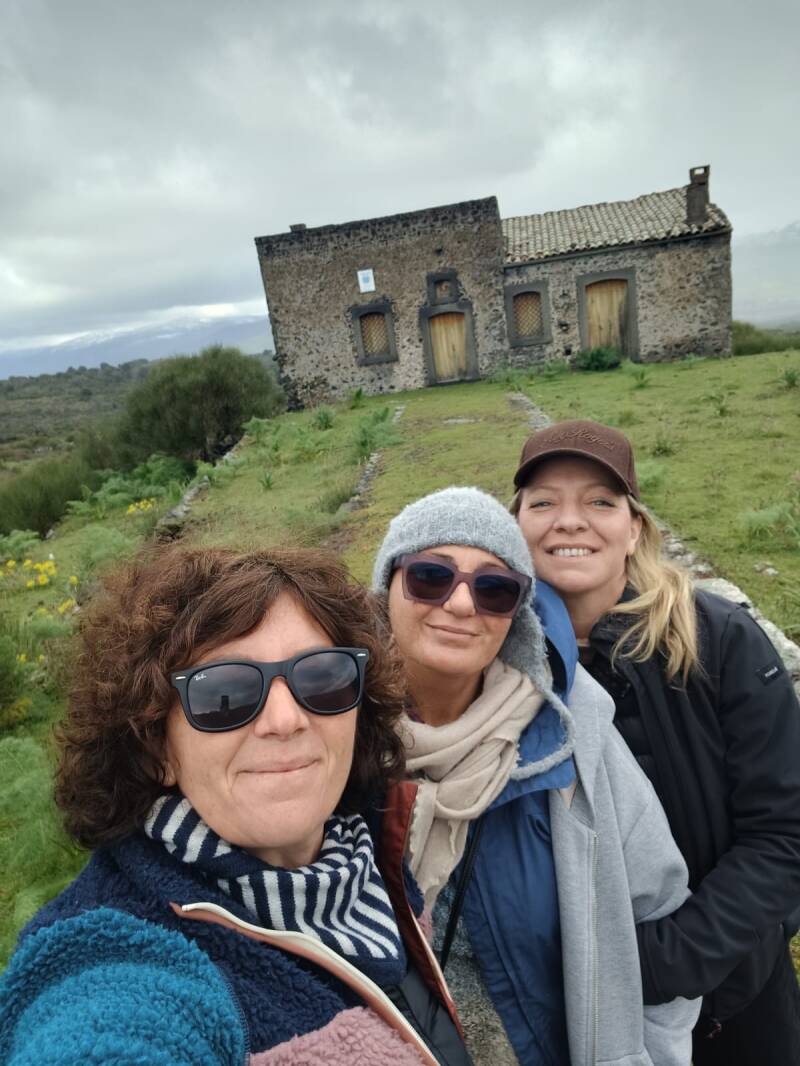
This past weekend I finally experienced something I had been wishing for a long time—a few days in Sicily exploring the Etna wine region with my friends Chiara and Valentina.
What started as a wine-focused trip quickly became something much deeper. Etna has a way of pulling you in—not just through its wines, but through its raw volcanic energy, its unique soils, the generosity of its people, and the way food, culture, and landscape all blend together so naturally.
Trips like this remind me why I truly love what I do. Planning wine experiences here feels natural—Etna has a soul that’s impossible to replicate anywhere else.
Day 1 – From Catania to Randazzo: First Sips of Etna
We landed early in Catania and, without overthinking it, went straight to Caffè Parisi. That first bite of a warm raviola di ricotta—crispy outside, soft and creamy inside—the best ricotta ever and it felt like the real beginning of the trip.
From there, we drove towards Randazzo for our first visit at Ayunta, a small boutique estate on Etna’s northern slope.
Filippo, the owner and winemaker, welcomed us in such a genuine way that within minutes it felt like we had known him for years. Outside it was raining, but inside the cellar there was warmth, quiet, and stories that immediately pulled us in.
He shared his journey—starting from a small plot of land, slowly building what Ayunta is today. There’s something very personal and almost destined in the way his project evolved, full of details and turning points that make his story truly unique.
Seeing the original palmento was a special moment. These ancient stone structures, once used to vinify grapes by gravity, are a direct connection to Etna’s past. Standing there, you really feel how deep the roots of winemaking go on this volcano.
The tasting was simple yet profound. Wines crafted mainly from indigenous grapes Nerello Mascalese and Carricante,ranging from vibrant, energetic expressions to more elegant and finely structured wines, all marked by that distinctive iron-like, almost blood-orange character that is so typical of Etna’s volcanic terroir. Everything was served in a warm, living-room paired with bread, olives, local cheeses, and salumi.
Filippo’s wines are honest and precise—wines that don’t try to impress, but simply express.
I truly loved the intimacy of this experience. The cellar is not open to the public yet, which makes it even more special. This is exactly the kind of place I love including in curated wine journeys—small, authentic estates where you connect directly with the winemaker, balanced with more structured and historic wineries.
Terre Nere: Understanding Etna
The day continued at Tenuta delle Terre Nere an iconic winery founded by Marc de Grazia—known for his role in the“Barolo Boy” revolution and one of the key figures behind the modern Etna wine movement.
With Domenico, a knowledgeable and genuinely friendly estate manager, we explored the vineyards by jeep, moving across different lava flows and soil compositions. The ride itself was incredibly insightful—it really helped us understand the distinct characteristics of this unique land. It’s fascinating how dramatically the landscape changes within such short distances—and how clearly that diversity is reflected in the wines.
The tasting really brought everything together.
The whites, driven by Carricante, were sharp and saline, the rosé delicate and precise, while the reds, based on Nerello Mascalese, showed elegance and depth, with that Burgundian finesse that makes Etna so fascinating. I first discovered this winery when San Lorenzo was named among the Top 100 wines by Decanter—and experiencing it in person made it all the more meaningful.
The cellar is beautifully designed—modern, elegant, and highly informative. During the tasting, each wine was presented alongside a sample of its vineyard soil, allowing us to visually and sensorially connect the wine to its origin. It was a brilliant way to truly grasp the importance of single-vineyard plots and how deeply terroir shapes each expression.
As we left, the cold started to settle in and we headed towards Linguaglossa to find some warmth. And then—one of those unexpected little moments—while driving through town, I spotted Marc de Grazia himself.
I didn’t get the chance to stop, which honestly I regret a bit. I would have loved to introduce myself and ask him a few questions about his work and vision….Next time, I won’t let traffic get in the way.
We then checked into a family-run B&B before heading out for dinner at Trattoria Linguagrossa.
Dinner was everything you want after a long wine day:
Arancini, melanzane alla parmigiana with pistachios, perfectly grilled meats, beef meatballs cooked with lemon leaves, and salsiccia al ceppo with wild fennel—all paired with more Etna wines from an impressive cellar.
Day 2 – Etna Landscapes & Randazzo Again
The plan was to trek Mount Etna, but the weather had other ideas. Instead, we drove up to Quota Mille.
The landscape there is surreal—lava flows from 1981 create a black, almost lunar terrain, interrupted by Mediterranean vegetation. The contrast is striking. You also see the ferla plant everywhere, traditionally used by locals to craft simple stools.
Around midday, we headed back to Randazzo for a stop at Il Buongustaio – da Pippo.
This is more than a wine shop—it’s an experience. Pippo opened bottles after bottles (we tasted around twelve), accompanied by local charcuterie. His passion is contagious, and the atmosphere makes it very hard to leave. We stayed longer than planned, and no one regretted it.
In the afternoon, we headed to Taormina to visit the amphitheater—one of Sicily’s most iconic views. Elegant and scenic, Taormina is also a great base for those looking to explore Etna with a more luxurious touch—beautiful hotels, refined restaurants, and easy access to wineries. A private driver here makes perfect sense.
Back in Catania, we checked into a charming B&B near the Duomo. Dinner was relaxed and local: fish street food, including cod salad and sandwiches, paired with a bottle of Grillo.
Day 3 – Markets, Ortigia & Final Toast
Sunday morning started with the flea market just behind our B&B—authentic, vibrant, and full of local life.
We then drove to Ortigia, where our first stop was as simple as it was memorable: fresh lemon juice with a pinch of salt. Sometimes, that’s all you need.
Lunch was pure Sicilian comfort: Pasta alla Norma, involtini di pesce spada, and a glass of Inzolia. Every bite felt authentic, generous, and deeply satisfying.
Ortigia completely captured us. Less polished than Taormina, but more intimate and authentic—full of small artisan shops and hidden corners. We couldn’t resist exploring, and even discovered a lovely spot, Cortile Verga, for a pre-sunset drink—an excellent recommendation from a local we met along the way.
Back in Catania our final night in Sicily ended on the rooftop of Ostello degli Elefanti—a relaxed, lively spot with stunning views over the city. The atmosphere was young and carefree, especially with a table next to us filled with more than fifteen American students in their twenties, bringing energy and spontaneity to the evening. Highly recommended if you are travelling with teenagers!
It was the perfect contrast to our wine-filled days—and the perfect moment to pause and take it all in.
Last Morning – Taking Sicily Home
Before heading to the airport, we made one last stop at the local food market.
We wanted to bring everything back with us—pistachios, oregano, olives, sun-dried tomatoes, salsiccia al finocchietto, cheeses… a suitcase full of Sicily.
And of course, a final stop at Caffè Parisi for cannoli, cassata, and arancini to take on the plane.
My Final Thoughts
Etna is not just a wine destination—it’s a complete experience.
The wines are unique, shaped by volcanic soils and extreme conditions. The food is deeply rooted in tradition. And the people bring it all together with warmth and authenticity.
After trips like this, one thing is certain:
I love coming back—and even more, I love creating and planning wine journeys here. 🍷
Add comment
Comments