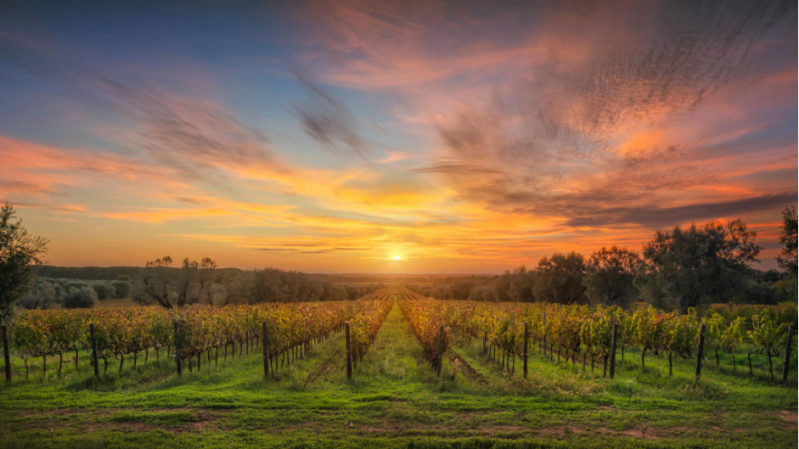
Arriving in Bolgheri feels like stepping into a living wine museum. The famous cypress-lined road leads to vineyards just a few kilometers from the Tyrrhenian Sea—on the same coastal strip cultivated by the Etruscans more than two millennia ago.
This is not simply a destination for great wine. It is one of the rare places where you can taste world-class bottles while standing on ancient viticultural land.
Wine in Etruscan culture was not just agricultural—it was religious, social, and economic. It appeared in tomb paintings, ritual libations, and long-distance trade.
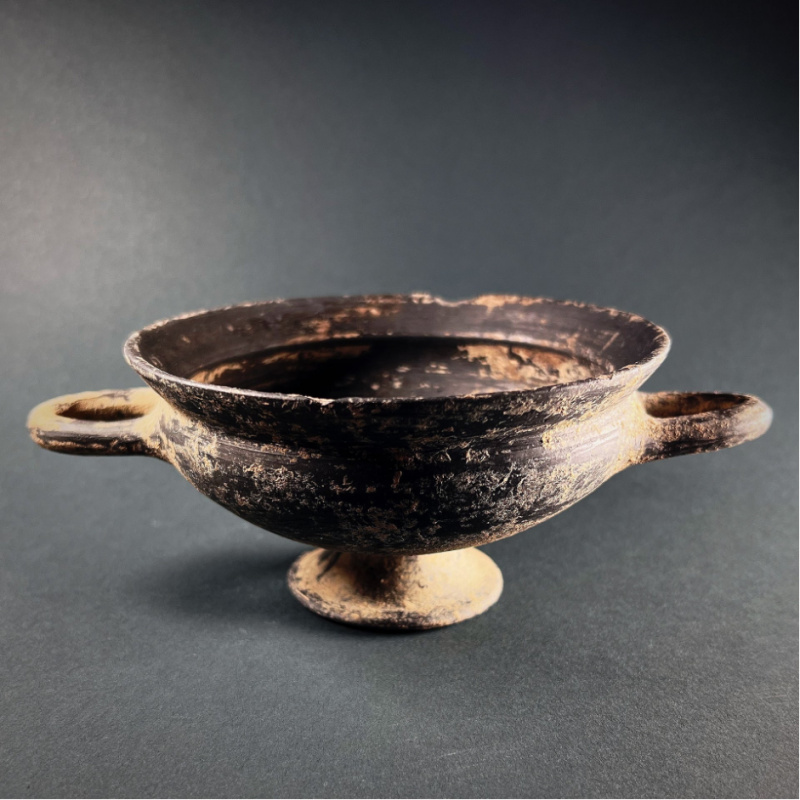
Kylix, Etruscan Wine, and Bolgheri: A 2,700-Year Continuum 🍷
The kylix—a shallow, wide drinking cup with two horizontal handles—originated in Greece but became deeply embedded in Etruscan culture (called culichna in Etruscan).
It was used during the symposium, the social drinking ritual that followed the banquet. Wine was:
- mixed with water
- consumed while reclining
- accompanied by music, poetry, and political conversation
Unlike the Greek world, Etruscan women participated, making the act of wine drinking more socially inclusive.
The kylix was not just tableware—it was a symbol of status, identity, and ritualized sociability. Many were imported from Athens; others were locally produced in bucchero, the distinctive black Etruscan ceramic.
The Etruscans were among the earliest large-scale wine producers in Italy. Along the coastal belt between Populonia, Baratti, and the area of modern Bolgheri, they:
- cultivated vineyards systematically
- carved rock-cut pressing basins
- stored wine in large clay vessels sealed with resin
- exported it across the Mediterranean
Their wines were often:
- oxidative in style
- infused with herbs, honey, or resins
- consumed young and spiced
Wine played a religious and funerary role, appearing in tomb iconography and libation rituals. It was both a commodity and a cosmological symbol.
Bolgheri Today: A Modern Expression of an Ancient Terroir
Modern Bolgheri DOC (established 1994) sits on the same coastal terroir once cultivated by the Etruscans:
- sandy and alluvial soils
- maritime breezes
- strong viticultural vocation
Today the area is globally known for Bordeaux-style blends, especially Sassicaia, which helped define the Super Tuscan movement.
While the grape varieties are international—Cabernet Sauvignon, Merlot, Cabernet Franc—the cultural grammar of wine remains ancient: prestige, trade, hospitality, and landscape identity.
A Continuous Gesture
The connection between kylix → Etruscan wine → Bolgheri is not merely archaeological—it is cultural.
Across nearly three millennia, the gesture is unchanged:
to raise a vessel of wine as an act of culture, community, and place.
Add comment
Comments