It was a stormy, foggy day at the end of January, and driving from Bolgheri to the Chianti region turned into quite an adventure. Margarethe was behind the wheel, focused and determined, while I sat beside her, watching the Tuscan landscape dissolve into mist. Rain, wind, and low clouds followed us all the way to Castelnuovo di Berardenga, where we had been invited to visit Borgo San Felice.
Our mood was mixed—curiosity, fatigue, and that quiet uncertainty that comes with winter travel. But the moment we arrived, something shifted. Almost instantly, our hearts opened to beauty.
The Borgo revealed itself slowly: an ancient hamlet restored with extraordinary care, where every stone seems to remember its past. Despite the rain, a deep sense of warmth surrounded the place. We were welcomed by Federico, the hospitality manager, who from the very first moment felt less like a host and more like a friend. Genuine, charming, effortless.
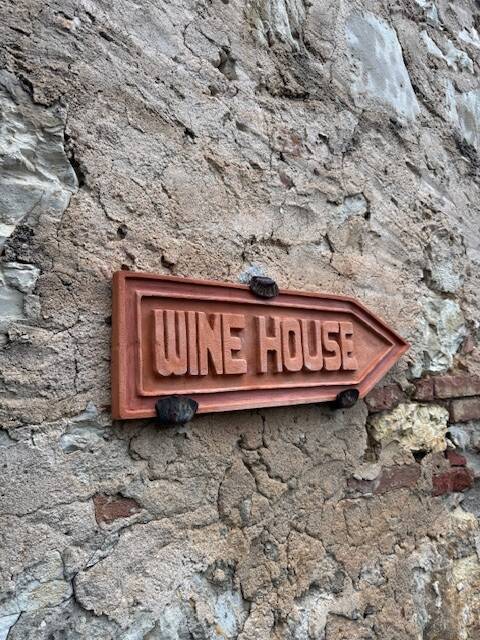
We walked the property together under umbrellas, the rain continuing its soft rhythm. And somehow, instead of dampening the experience, it transformed it. The old pieve stood quietly in the mist, traces of an ancient café sign whispered stories of village life long gone, and dormant vines waited patiently for spring. An open-air museum of old vines unfolded before us, silent yet powerful. It felt magical, intimate, timeless.
In the cellar, we discovered the essence of San Felice’s winemaking philosophy—precise and respectful, deeply rooted in tradition yet unmistakably forward-looking. From there, the tasting became a true journey through Tuscany. Glass after glass revealed remarkable aromas and flavors, moving gracefully from Chianti to Montalcino, and finally touching Bolgheri.
As the tasting unfolded at Borgo San Felice, we began to understand just how deeply the estate’s commitment to identity and heritage runs.
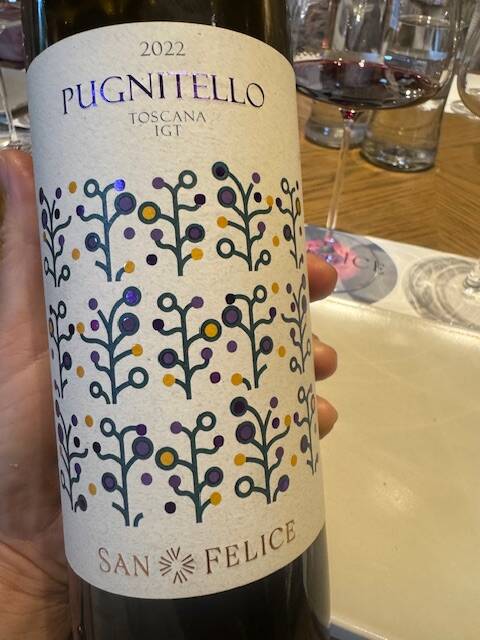
One of the most moving discoveries was Pugnitello 100%, a rare and ancient Tuscan grape variety that San Felice has chosen to protect and champion. With 15 hectares dedicated to safeguarding this historic vine, the estate plays a crucial role in preserving a nearly forgotten chapter of Tuscany’s viticultural history. In the glass, Pugnitello was intense yet refined—wild and elegant at the same time. A wine with a true soul.
The journey continued with the Chianti Classico Gran Selezione “La Pieve” 2021, followed by Brunello di Montalcino Campogiovanni, parcel P#327, vintage 2021—both wines expressing precision, depth, and a strong sense of place.
And then came a moment we won’t forget: Chianti Classico Riserva Poggio Rosso 2011. Simply wow. A wine at its peak—complex, vibrant, and deeply emotional—the kind of bottle that makes you pause, exchange a smile, and sit in silence, fully present.
That afternoon confirmed what we already felt walking through the rain-soaked borgo: this is not just about wine, but about vision. We will certainly return — to San Felice in Chianti, to Campogiovanni in Montalcino, and soon enough to Bolgheri, where a new chapter is already taking shape.
In 2027, San Felice will open Bell'Aja — and if the philosophy remains the same, we already know it will be something very special.
Outside, the rain continued, the wind was cold, and the road remained foggy. But inside, surrounded by authenticity, kindness, and beauty, we felt it clearly: the true warmth of Tuscany reveals itself when you least expect it.
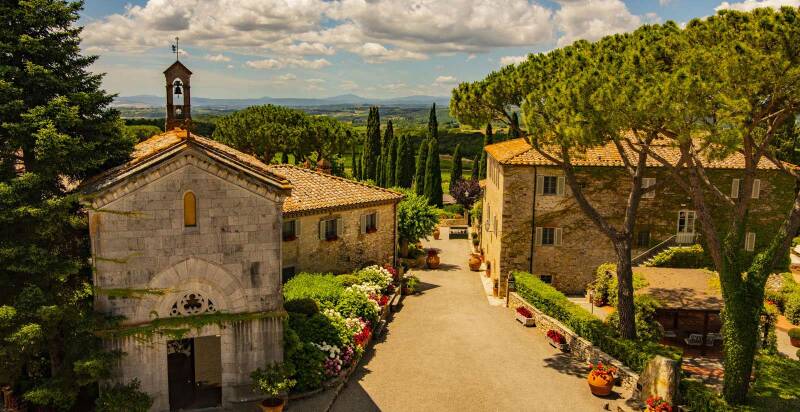
San Felice in Spring – image from the web
Add comment
Comments